B&H PROJECT KNOWLEDGE

Standing Desk Project Resources

Practical guidance for the decisions behind a commercial rollout, from reading a floor plan and selecting a frame system to preparing an international procurement brief.

01PlanLayouts, workstation counts, cable routes, and project inputs.
02CompareFrame formats, motor systems, loads, and project fit.
03ProcureOEM briefs, quotation boundaries, shipping terms, and delivery.

THE RESOURCE LIBRARY

Browse the guides

18 resources

Showing 18 resources.

Types of Standing Desks: Choose the Right Adjustment System

Frame & Configuration Selection

Types of Standing Desks: Choose the Right Adjustment System

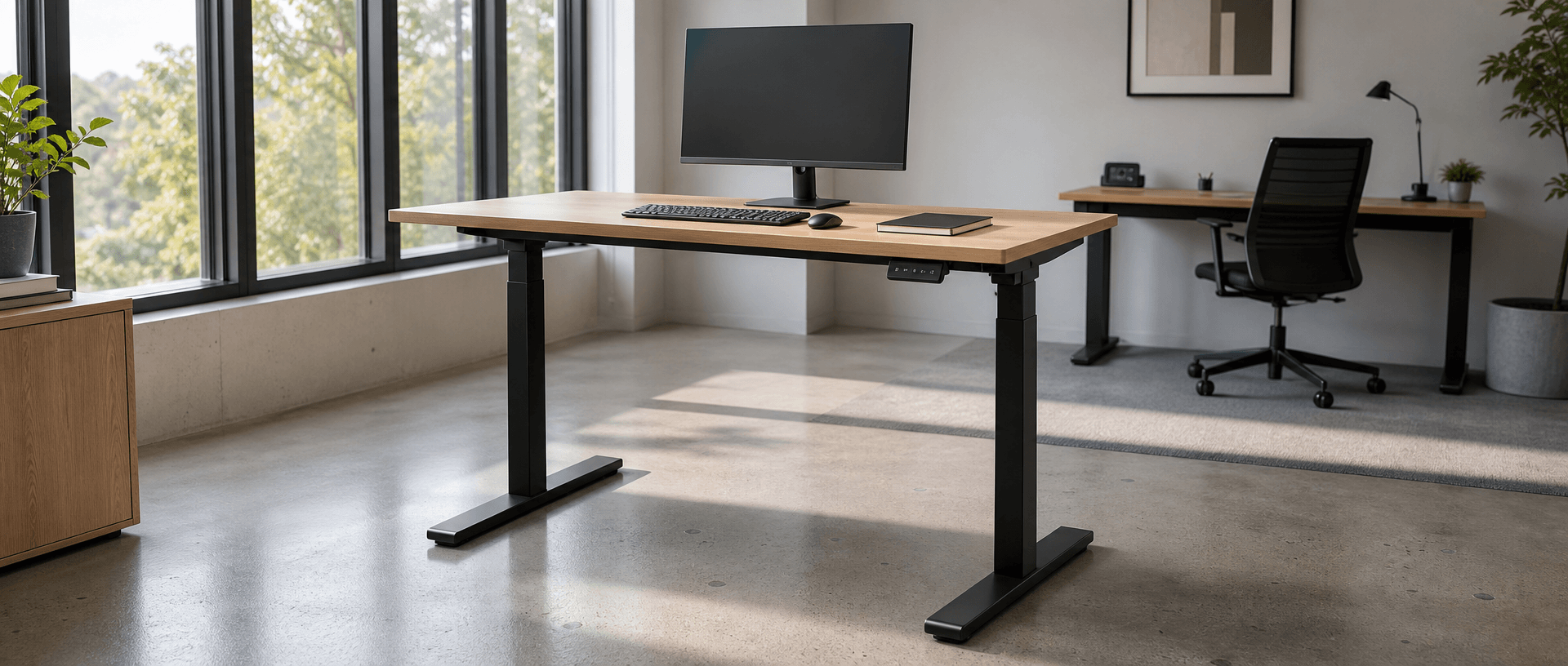
Quick Answer The main types of standing desks are electric desks, hand-crank desks, pneumatic desks, fixed standing-height desks and desktop converters. Start by deciding whether the whole work surface needs to move or only the equipment on a raised platform. For office projects with power available and regular sitting-to-standing changes, B&H Ergonomics recommends electric adjustment—even…

How to Raise a Desk: Practical Options and When to Upgrade

Commercial Project Planning

How to Raise a Desk: Practical Options and When to Upgrade

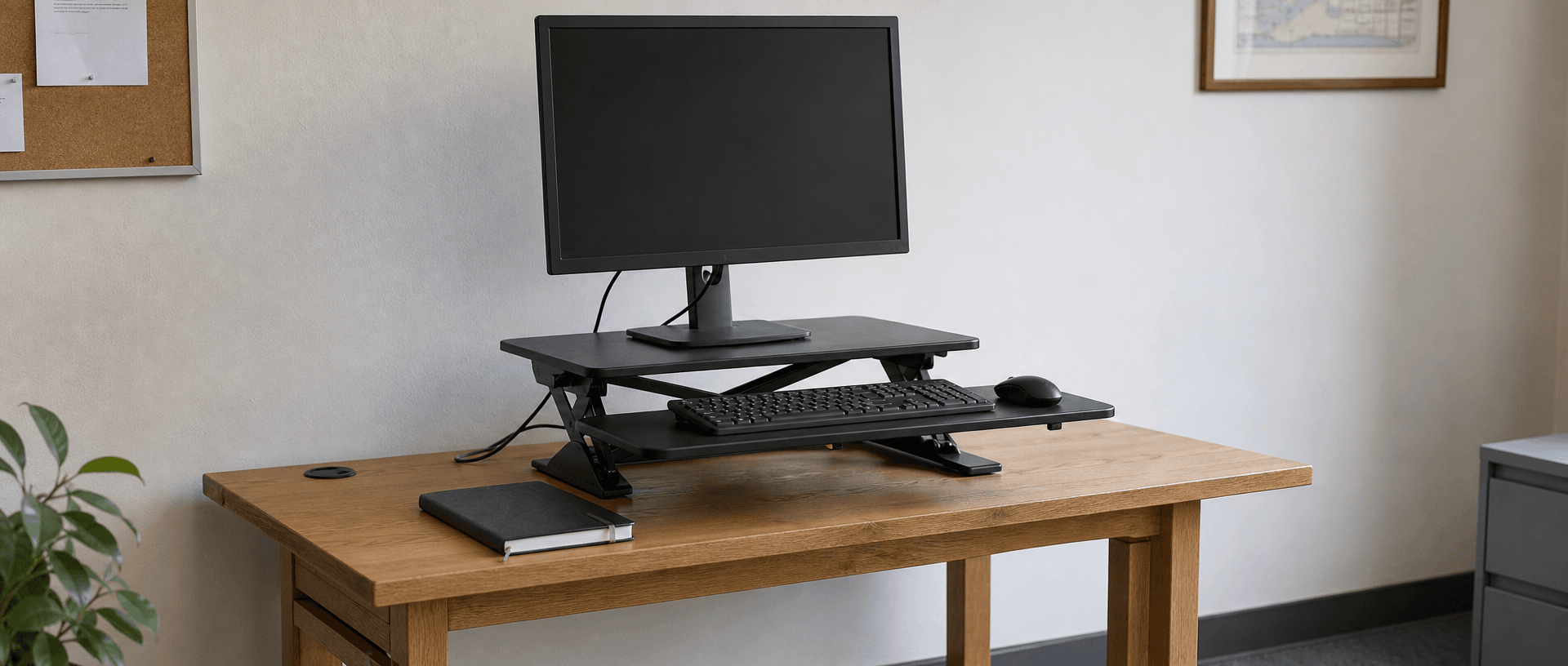
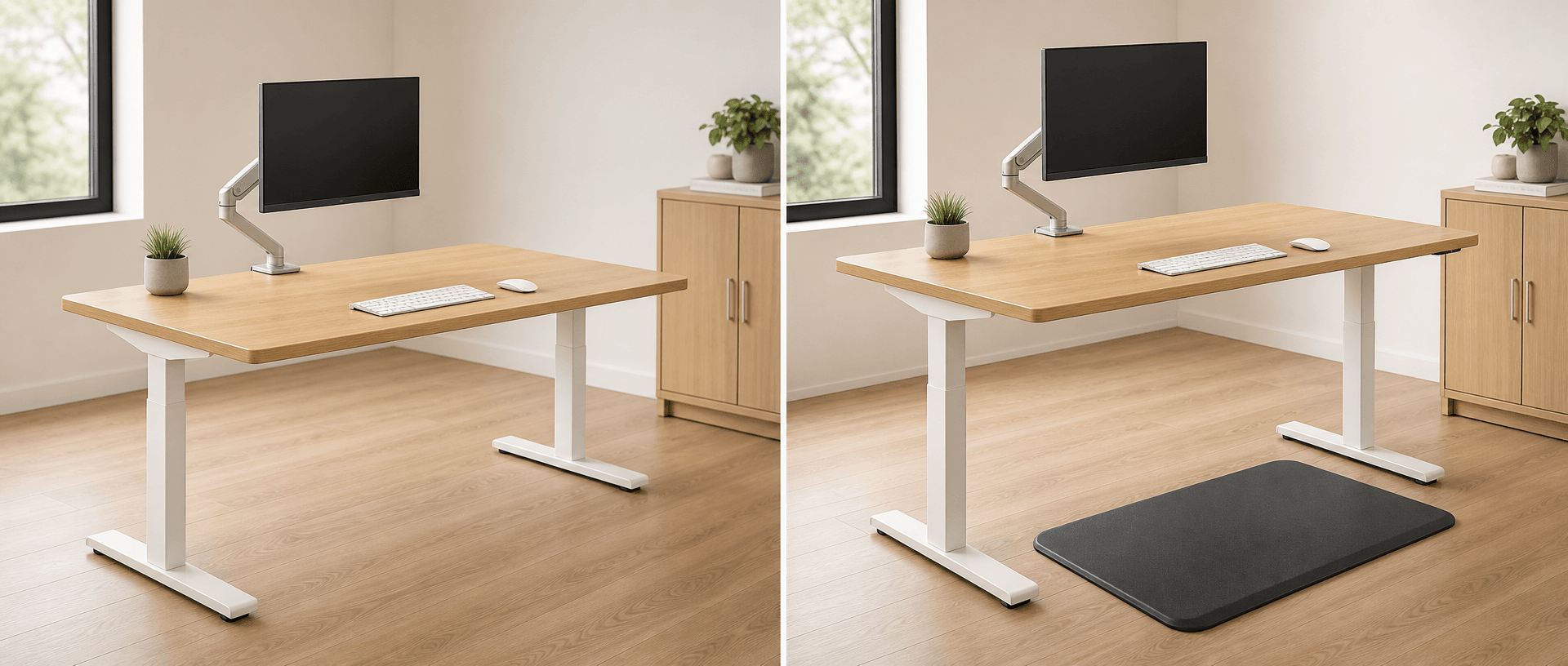
Quick Answer To raise a desk, first check for built-in height adjustment. If the desk is fixed, compatible risers can lift the whole desk, while a desktop converter raises the keyboard and screen without changing the space underneath. Use a monitor arm when only the screen needs to move. For frequent sitting and standing, consider…

Optimal Standing Desk Height: Measure Your Working Height

Commercial Project Planning

Optimal Standing Desk Height: Measure Your Working Height

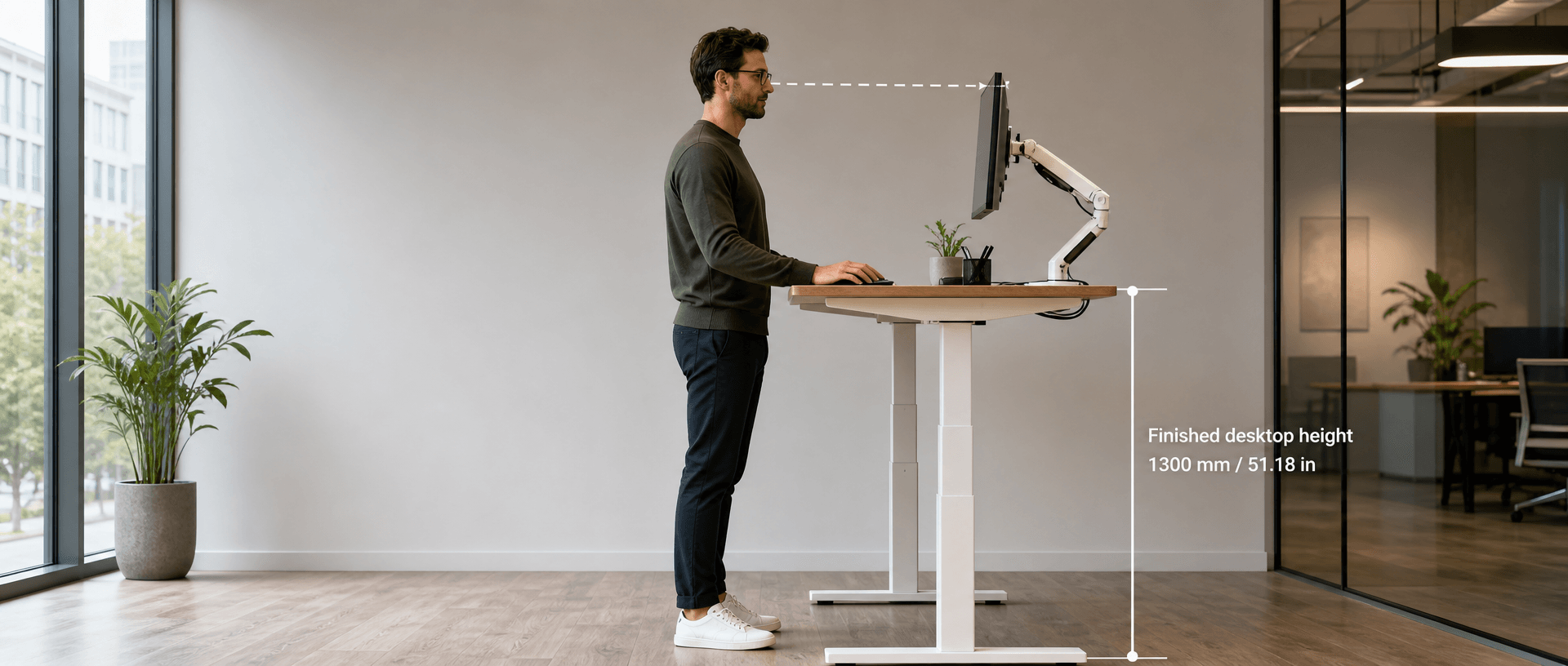
Quick Answer Your optimal standing desk height puts the keyboard around your relaxed elbow height, with your shoulders down and your hands aligned with your forearms. Measure in your usual work shoes, then adjust the desk while testing the actual keyboard and mouse. If you alternate between using a standing mat and standing on the…

How a Standing Desk Mechanism Works: Motors, Columns and Controls

Frame & Configuration Selection

How a Standing Desk Mechanism Works: Motors, Columns and Controls

Quick Answer A standing desk mechanism is the system that changes a desk’s height. In a screw-driven electric desk, the motor supplies rotational power, while a screw-and-nut assembly converts that rotation into linear movement inside the lifting column. The telescopic column extends or retracts to move the desktop. A controller manages motor operation in response…

Standing Desk Ergonomics: An Office Workstation Setup Checklist

Commercial Project Planning

Standing Desk Ergonomics: An Office Workstation Setup Checklist

Quick Answer Standing desk ergonomics starts with fitting the workstation to you in both sitting and standing positions. Set the keyboard around elbow height with relaxed shoulders and straight wrists, then position the screen for comfortable viewing. Recheck both after changing position, keep the desk's movement path clear, and alternate sitting, standing and movement instead…

Standard Desk Height: Measurements and Fit Checks for Office Workstations

Commercial Project Planning

Standard Desk Height: Measurements and Fit Checks for Office Workstations

Quick Answer The common standard desk height for fixed office desks in the United States is 28–30 inches (711.2–762 mm), measured from the floor to the top of the desktop. Use this range as a starting point. Your seated elbow height, keyboard position and foot support determine whether a desk fits. If a fixed desk…

PROJECT INQUIRY

Request a Quote

For new projects, our minimum order is 40 workstations. We reply within 48 business hours.